
If your child is struggling emotionally or behaviorally, it can be hard to know what to do – or where to turn.
Anger and aggressive behavior, anxiety, withdrawal, low mood, social challenges, or difficulty coping at school are all common in children and teenagers, and they can show up for many different reasons. Often, they’re linked to things outside your control as a parent.
Behavioral therapy for kids or teens can feel like a big step, but it doesn’t mean you’ve done something wrong. In fact, it usually means the opposite: you’re recognizing that your child needs extra support, and you’re taking steps to help them.
While behavioral therapy is one of the most commonly recommended approaches for children and teenagers, we know it can also be confusing to understand what it actually involves, how it works at different ages, and whether it’s the right type of support for your child.
That’s partly because behavioral therapy is a broad term that covers several therapeutic approaches. But while these approaches can each look slightly different in practice, they all share a common goal – helping children and teens understand their behaviors, emotions, and reactions, and learn healthier ways to cope.
What is behavioral therapy for kids and teens?
Behavioral therapy is a broad term that covers a range of therapy approaches designed to help children and teenagers manage emotional, behavioral, and mental health challenges.
There isn’t just one type of behavioral therapy. Different approaches are often used depending on a child’s needs.
For example, applied behavior analysis (ABA) is commonly used with autistic children, while dialectical behavior therapy (DBT) may be used with teens experiencing intense emotional distress, substance abuse, or eating disorders.
That said, cognitive behavioral therapy (CBT)is by far the most common and widely used form of behavioral therapy for children and teenagers.CBT focuses on the connection between thoughts, feelings, and behaviors, and forms the basis for most other behavioral therapies – including those mentioned above.
In practice, therapists don’t usually stick rigidly to one method. Instead, they draw from different behavioral techniques and adapt them to a child’s age, development, and specific challenges – while following a shared, evidence-based framework.
How does behavioral therapy work?
At its core, behavioral therapy is a practical, skills-based approach. Rather than focusing only on talking about feelings, it looks closely at patterns of behavior, emotional reactions, and the situations that trigger them – and then helps children and teens learn more helpful ways to respond.
In everyday terms, behavioral therapy helps answer questions like:
- Why does this behavior keep happening?
- What triggers it?
- What skills are missing right now?
- How can we respond differently – at home, at school, and in daily life?
Sessions are usually structured and active, with a focus on learning coping skills, emotional regulation strategies, and problem-solving tools that can be used in real life.
Essentially, the therapist doesn’t just talk to your child about challenges or emotions – they actively teach skills and coping mechanisms to help them, and help families apply them in real life.
What does behavioral therapy help with?
Behavioral therapy is often recommended when a child or teen is struggling in ways that feel repetitive, intense, or difficult to manage – even when parents are doing everything they can.
It can help to treat or manage a wide range of disorders, behavioral issues, and other challenges, including:
- Anxiety (constant worry, avoidance, reassurance-seeking, panic, and phobias).
- ADHD (impulsivity, emotional outbursts, difficulty following rules).
- Anger and emotional regulation issues (meltdowns, shutdowns, aggression, violent or disruptive behavior).
- Depression or low mood (withdrawal, irritability, loss of motivation, hopelessness, self-harm).
- Oppositional or defiant behaviors (frequent power struggles, refusal, rule-breaking, school-related behavioral issues).
- Autism-related behavioral and emotional challenges.
- And more.
Rather than viewing behavior as “bad” or intentional, behavioral therapy looks at why the behavior is happening and what support or skills are needed to help the child cope more effectively.
Is CBT the same as behavioral therapy?
CBT, or cognitive behavioral therapy, is a type of behavioral therapy – and it’s the most widely used and researched approach for children and teenagers, as well as adults.
Most behavioral therapy for young people draws heavily from CBT principles, even if it’s not always labeled as CBT.
The principles that underlie CBT are based on the idea that:
- Thoughts influence emotions
- Emotions influence behavior
This means that in CBT-based therapy, children and teens learn to recognize their unhelpful thought patterns, understand how those thoughts affect their feelings, and practice more balanced ways of responding.
For example, a child who immediately thinks “I can’t do this” may feel overwhelmed and give up. CBT helps them recognize that pattern and develop more helpful responses, such as breaking tasks into smaller steps or using coping strategies when frustration rises.
While the underlying principle of CBT is the same at any age, the way the therapy is delivered varies depending on the person’s age, developmental stage, and specific challenges they are facing.
What does behavioral therapy for kids involve?
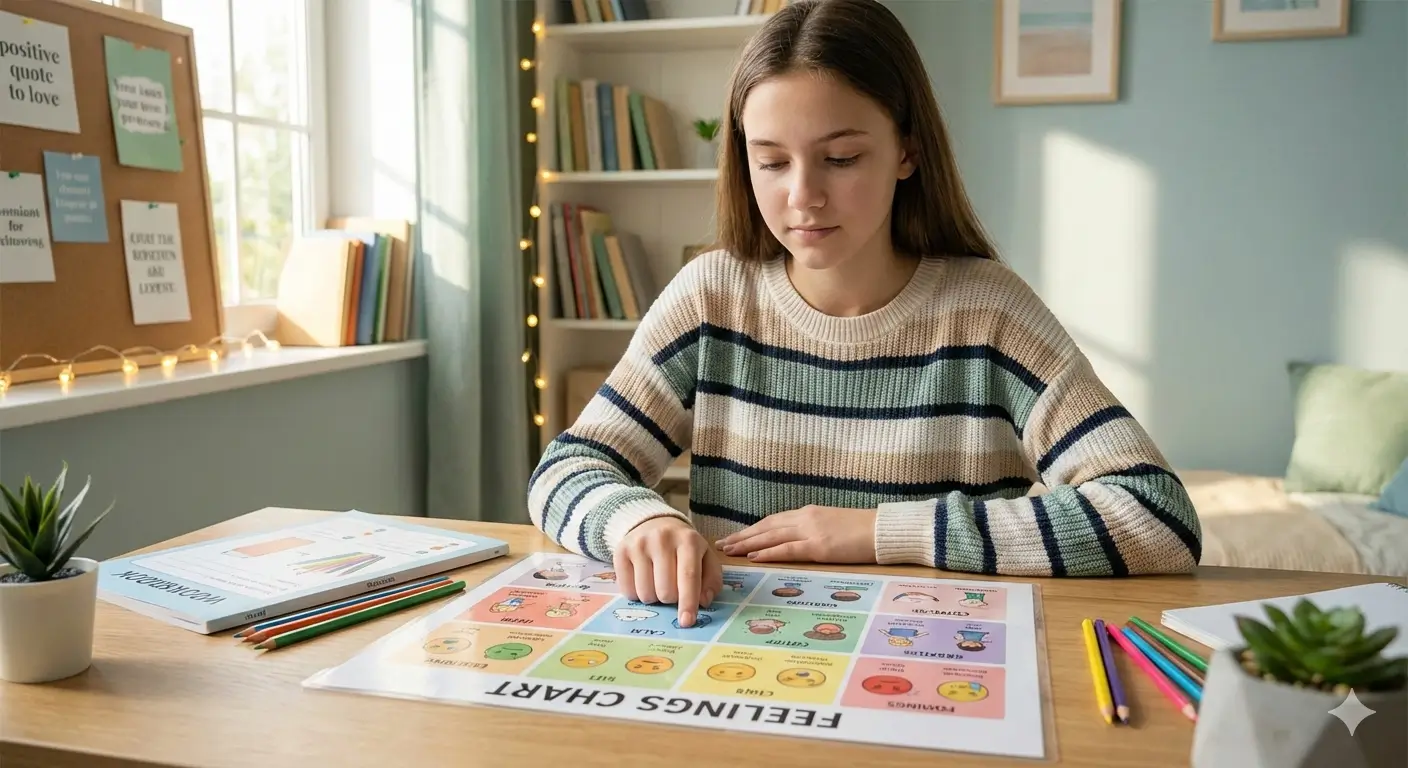
For younger children, behavioral therapy is often hands-on and play-based. Sessions may use games, drawings, stories, or simple activities to help children explore emotions and practice new skills in a way that feels natural and engaging.
At this age, therapy often focuses on:
- Helping children identify and name their emotions.
- Learning what happens in their body when their emotions get “big.”
- Practicing calming strategies for frustration, anxiety, or overwhelm.
- Understanding cause-and-effect around behavior in a supportive way.
Because younger children are still developing emotional and communication skills, parent involvement is usually an important part of the therapy. Caregivers may be guided on how to respond consistently at home and reinforce skills outside of sessions, where behaviors most often show up.
Behavioral therapy for teenagers: what’s different?
For teenagers, behavioral therapy approaches shift to reflect their growing independence and emotional awareness. Sessions tend to be more discussion-based and collaborative, while still remaining practical and skills-focused.
Teens may work with a therapist to:
- Identify their unhelpful thought patterns or assumptions.
- Learn ways to manage stress, pressure, and strong emotions.
- Navigate friendships, school demands, and family conflict.
- Build coping skills that support their independence and self-confidence.
Parents are typically less involved in sessions with teenagers, with greater emphasis placed on privacy and trust between the teen and their therapist, to ensure they feel safe opening up.
However, family communication and support are often still an important part of the process – but this needs to be carefully managed to ensure their trust (and confidentiality) is maintained, while balancing the need for family support, and prioritizing their safety.
How CBT principles are adapted for kids and teens
Although the core principle of CBT – that thoughts, feelings, and behaviors are all interlinked – stays the same across all ages, how those principles are applied looks very different across different ages and developmental stages.
With younger children, CBT-based behavioral therapy often uses:
- Play, drawing, stories, and structured games.
- Simple language and visual tools to explain thoughts and feelings.
- Repetition and practice to reinforce new skills.
- Concrete examples linked to their everyday situations.
With teenagers, CBT involves more direct talk therapy, and tends to focus more on:
- Using relatable means of communication (humor, technology).
- Identifying patterns in thinking and behavior.
- Challenging negative self-talk.
- Applying coping strategies to real-world stressors, such as school or relationships.
This flexibility allows therapy to remain developmentally appropriate, rather than expecting children or teens to fit a one-size-fits-all model.
Behavioral therapy for children and teens at REACH Ohio
At REACH Behavioral Health Ohio, we provide behavioral therapy for children and teenagers that’s tailored to each young person’s age, needs, and goals.
We offer behavioral therapy in a supportive, non-judgmental environment – both in-person or online via tele-therapy – and with the ability to combine therapy and psychiatry when needed. We work collaboratively with families, helping parents and caregivers feel informed and supported throughout the process.
Whether concerns are just beginning or have been present for some time, the right support can make a real difference. Many children and teens learn skills through therapy that help them feel more regulated, confident, and resilient as they grow.
If you’re unsure where to start or whether behavioral therapy is right for your child, our team is here to help guide you through the next steps.